
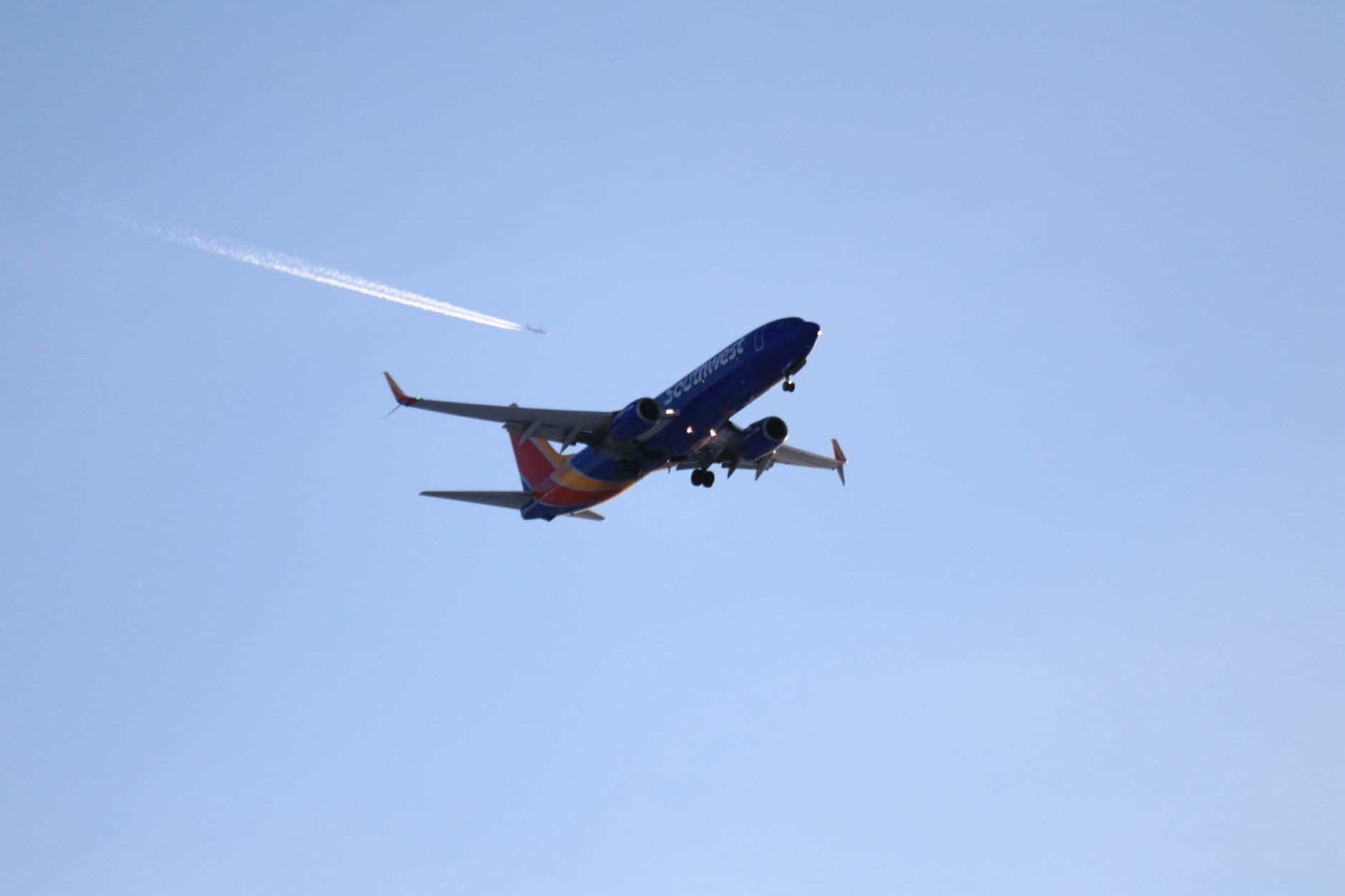
In the summer of 1971, a lawyer named Herb Kelleher was standing at the gate of a Dallas airport, watching passengers board a small Boeing 737.
There were no boarding groups. No zones. No assigned seats. The gate agent simply opened the door, and people walked on and sat wherever they wanted.
The flight was one of the first Southwest Airlines ever operated. Three planes, three cities, a triangle route between Dallas, Houston, and San Antonio. The company had nearly been strangled in its crib by competing airlines who sued for years to keep it from launching. Now it was finally flying, and it looked nothing like anything else in the American sky.
The open seating wasn't a temporary measure while they figured out their systems. It was the system.
Fifty-five years later, Southwest operates over 4,000 flights per day across 121 airports. It is the largest domestic carrier in the United States by passenger volume. And it still doesn't assign seats.
Every few years, an analyst or a journalist asks whether Southwest will finally modernize and adopt assigned seating. In 2024, the company actually announced it was considering the change. The stock price moved. Frequent flyers panicked. Op-eds were written.
Then, in early 2025, Southwest quietly shelved the plan. Open seating would stay.
To understand why, you need to understand what the open seat is actually doing. Because it is not doing what you think.
The Ten-Minute Turn
In 1972, a woman named Colleen Barrett was working as Herb Kelleher's legal secretary. She would eventually become president of Southwest Airlines. But in those early years, her contribution was more specific: she helped design the operational procedures that would define the company's economics for the next half century.
The most important of those procedures was the turnaround.
A "turn" is the time between when a plane arrives at a gate and when it departs again with new passengers. For legacy carriers in the 1970s, a turn took 45 to 60 minutes. Passengers deplaned slowly. The cabin was cleaned thoroughly. New passengers boarded by row number, back to front, with gate agents managing the process.
Southwest targeted a 10-minute turn.
Ten minutes from arrival to departure. Same plane. New passengers. Back in the air.
This sounds like a minor operational detail. It is actually the foundational economic advantage of the entire company.
Here's the math: a single Boeing 737-800 costs approximately $110 million. At a 10-minute turn, that aircraft can fly 6-8 flights per day. At a 45-minute turn, it flies 4-5. Over a year, that difference translates to hundreds of additional flights per aircraft. Across a fleet of over 800 planes, the compounding effect is measured in billions.
Southwest doesn't need to charge less per seat than United or American. It needs to fly more flights per plane. The unassigned seat is what makes that possible.
Why Open Seating Is Faster (It's Not Obvious)
Researchers at Arizona State University and other institutions have studied aircraft boarding for decades. The findings are counterintuitive.
Assigned seating creates congestion. When passenger 14C needs to reach row 14, they pass rows 1 through 13. If passengers in those rows are still loading overhead bins, the aisle blocks. One slow passenger in row 8 delays everyone assigned to rows 9 through 30.
Open seating distributes passengers more evenly. People naturally spread out. They take the first acceptable seat they see rather than shuffling past occupied rows to reach their assigned position. The result, confirmed in multiple studies: open seating boards a full aircraft 5 to 8 minutes faster than back-to-front assigned boarding.
Five to eight minutes doesn't sound like much. Multiply it by 4,000 daily flights. Then multiply by 365 days. Then calculate what those minutes mean in additional flights per aircraft per year.
That's the math that keeps open seating alive.
The Boarding Group Compromise
Southwest doesn't board in pure chaos. That's a common misconception.
The system works in layers. Passengers receive a boarding position (A1 through C60) based on check-in time or purchased priority. The A group boards first and gets the best selection. The B group boards next. The C group gets what's left.
This creates a tiered system that mimics some benefits of assigned seating (early boarders get preferred seats) while preserving the speed advantage (no one is walking past rows of seated passengers to reach a specific seat).
It also creates a revenue opportunity. Southwest sells "Early Bird Check-In" (automatic A-group positioning) for $15-25 per flight. And "Business Select" fares guarantee an A1-A15 position for roughly $30-50 more than standard fares. These products generate over $1 billion in ancillary revenue annually.
They are selling certainty within a flexible system. You don't need to buy a specific seat. You need to buy the guarantee that you'll have good options.
The Customer Paradox
Here's what makes the story complicated: customers say they want assigned seats. In surveys, consistently, 60-70% of Southwest passengers say they'd prefer knowing their seat in advance.
And yet.
Southwest has the highest customer satisfaction scores among US airlines. It has the lowest complaint rate filed with the Department of Transportation. It has the highest percentage of repeat customers in the industry.
People say they want assigned seats. Their behavior says they value something else more: the simplicity, the speed, the flexibility of no change fees and no cancellation penalties. The open seat policy is not separate from these other benefits. It is structurally connected to them.
The 10-minute turn that open seating enables means Southwest needs fewer planes to fly the same number of routes. Fewer planes means lower costs. Lower costs mean they can offer no change fees (which cost them almost nothing operationally because their seats aren't assigned to specific people). No change fees mean customers book more freely. More free booking means higher load factors. Higher load factors mean more revenue per plane.
Remove the open seat, and the entire chain weakens.
The 2024 Experiment That Didn't Happen
When Southwest announced in 2024 that it was "studying" assigned seating, the context matters. The airline was under pressure from activist investor Elliott Management. Stock price was down. Revenue growth had slowed. The investor's thesis: Southwest needed to act more like other airlines. Premium seats. Assigned boarding. Extra legroom rows.
The company commissioned studies. It ran simulations. It surveyed passengers.
What the simulations showed: assigned seating would add 7-12 minutes to each turn. Across the network, that translated to approximately 300-400 fewer flights per day at current fleet size. The revenue from selling assigned seats (estimated at $500-800 million annually) did not offset the operational cost of flying fewer flights (estimated at $1.5-2 billion in lost capacity).
The math didn't work. The open seat stayed.
What Herb Knew
Herb Kelleher died in 2019. By then, he'd been retired from active management for over a decade. But the system he helped design, with Colleen Barrett and a small team of operations-obsessed managers, had become so embedded in Southwest's DNA that removing any single element would require rebuilding the entire structure.
That's the real insight. The unassigned seat is not a feature. It is a load-bearing wall. It holds up the turnaround time, which holds up the fleet economics, which holds up the low fares, which holds up the customer flexibility, which holds up the loyalty.
Every airline in America assigns seats. Southwest makes more money per aircraft than any of them.
That's not coincidence. That's architecture.
For Travelers: What This Means for You
If you fly Southwest, the system rewards two things: early check-in (set an alarm for exactly 24 hours before departure) or paying the $15-25 for Early Bird. The A group gets aisle and window picks. The B group gets middle seats near the front or aisle seats in the back. The C group gets what remains.
The open seating also means something subtle that most travelers miss: you can change your flight for free, up to 10 minutes before departure, with no fare difference penalties. That flexibility exists because Southwest doesn't have to reassign a seat when you move. You just show up to a different flight. Sit anywhere.
That flexibility is worth more than any assigned seat. You just don't notice it until you need it.
Browse more airline analysis in our Airlines section. For current Southwest fare sales and other carrier deals, check our deals page. And for the official Southwest boarding process details, visit Southwest.com.