
On a Tuesday morning in March 2024, a ceramicist named Inês Moreira unlocked the door to her studio on Rua de Miguel Bombarda and found a note taped to the glass.
It was from a real estate agent. The building had been sold. She had ninety days.
Inês had been working in that studio for eleven years. She'd watched the street transform from a quiet stretch of shuttered storefronts into one of Porto's most vibrant gallery corridors. She'd been part of making it that way. Now the rent someone was willing to pay for what she'd helped build was more than her pottery could sustain.
Three blocks away, a man named Tomás Ribeiro was having a very different morning.
Tomás runs a small guesthouse. Six rooms, no sign out front, a waiting list that stretches three months into the future. His guests arrive knowing the address because someone told them about it. Someone always tells them about it.
He'd just received his booking figures for the coming summer. Every room, every night, May through September. Full. For the third year running.
These two stories are about the same city. And they explain something important about what Porto has become, and what it is becoming.
The Barcelona Comparison Everyone Makes (And Why It's Both Right and Wrong)
If you've been paying attention to European travel conversations over the past three years, you've noticed a pattern. Barcelona comes up, and someone mentions the protests. The "tourists go home" graffiti. The regulations. The short-term rental bans. The sense that the city has decided, collectively, that it has had enough.
Porto comes up next, usually in the same breath. "Go to Porto instead," people say. "It's what Barcelona was ten years ago."
This comparison is useful but incomplete.
Barcelona is a city of 1.6 million people that receives 12 million tourists per year. Porto is a city of 230,000 that receives about 3 million. The ratio is different, but the pressure is similar. Porto is simply earlier in the cycle.
What makes Porto genuinely different is not the absence of tourism pressure. It is how the city has responded to it. Where Barcelona erected barriers, Porto built bridges. Where Barcelona restricted, Porto redirected.
The result is a city that still feels, in 2026, like a place that wants you there. Not everywhere. Not at any cost. But genuinely, warmly, strategically.
The Geography of Welcome
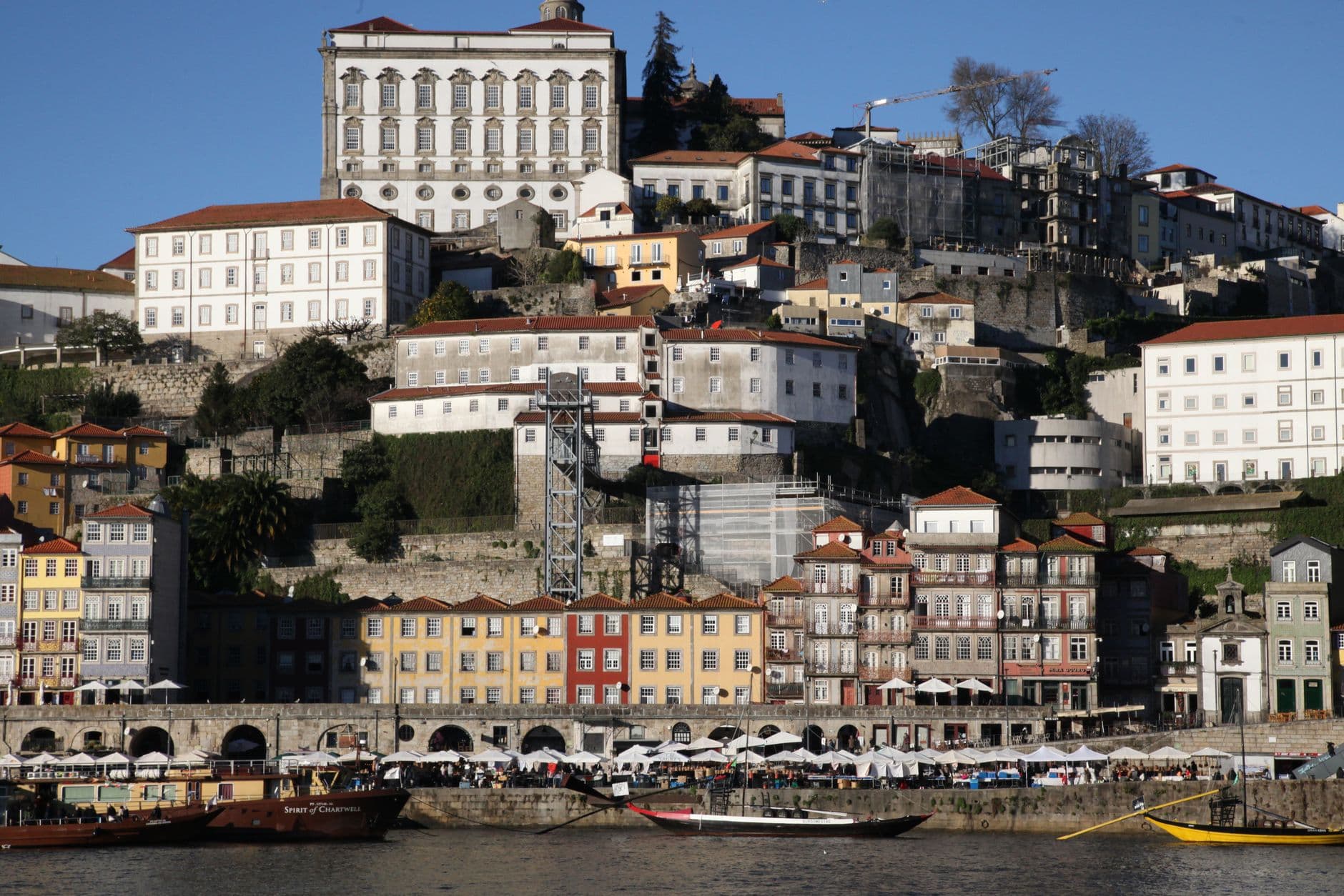
Porto is built on granite. Literally. The city sits on rocky hillsides that cascade down to the Douro River, and the stone is everywhere: in the buildings, in the streets, in the retaining walls that keep the whole improbable arrangement from sliding into the water.
This geography creates natural neighborhoods, separated by elevation and connected by staircases. Unlike flat cities where tourists spread evenly like water, Porto's hills create pockets. Ribeira at the riverfront gets the cruise ship passengers and the day-trippers. Cedofeita and Bonfim, up the slopes, remain almost entirely local.
The city has leaned into this. Rather than trying to disperse tourists across all neighborhoods (the Barcelona approach, which failed), Porto has invested in making the tourist corridors excellent while leaving the residential neighborhoods alone.
Walk along the river, and everything is polished. The signage is beautiful. The restaurants are plentiful if expensive. The views are curated and accessible.
Walk fifteen minutes uphill, and you're in a neighborhood where the nearest restaurant has no English menu, the wine costs two euros, and the old man at the next table has been eating lunch there for thirty years.
Both experiences are available. Neither is accidental.
The Tomás Economy
Tomás Ribeiro's guesthouse doesn't appear on Booking.com. It has no Instagram account. Guests find it through word of mouth, through travel writers who are asked not to name it, through the kind of quiet reputation that only builds over time.
This isn't pretension. It's strategy.
"The hotels on the riverfront are fine," Tomás told me, standing in his small breakfast room where he serves coffee from beans roasted two streets away. "They serve a purpose. But the people who stay here want something different. They want to live in Porto for a few days. Not look at it from outside."
His guests eat where he eats. They shop where his wife shops. They walk to Mercado do Bolhão in the morning not because a guidebook told them to, but because Tomás mentioned he was going for fish and they could come along.
This is the Porto that doesn't show up in the statistics. Thousands of small operators running businesses that sit below the radar of corporate hospitality. They don't scale. They don't want to. They exist at a size that allows them to be genuinely good.
What Actually Draws People Here
The port wine is famous. The azulejo tiles are beautiful. The francesinha is a sandwich that defies physics. But none of these things explain why Porto's tourism numbers have grown 340% since 2010.
What draws people here is harder to photograph.
It's the sense that the city is making things. Porto has always been a working city, a city of production rather than performance. Where Lisbon was the capital of empire and spectacle, Porto was the city that shipped the wine, built the boats, and got things done.
That identity never fully disappeared. It evolved.
Today, Porto's creative economy is one of the fastest growing in Europe. The ceramic studios, the natural wine producers, the small-batch coffee roasters, the independent publishers. These aren't tourist attractions dressed up as local businesses. They're actual businesses that happen to be interesting enough that visitors want to see them.
Inês Moreira, the ceramicist from our opening, found a new studio within those ninety days. It's in Campanhã, a neighborhood in Porto's east that most tourists never reach. Her rent is lower. Her neighbors are a furniture restorer and a printmaker. The street has no restaurants and no signage.
She's busier than ever. Her customers find her the same way Tomás's guests find his guesthouse. Someone tells them.
The Price Question (For Now)
Let's be direct about numbers.
A quality dinner for two with wine in Porto's Cedofeita neighborhood: 40 to 60 euros. The same meal in Barcelona's Gràcia neighborhood: 80 to 120 euros.
A well-located hotel room in Porto's center: 90 to 150 euros per night in summer. Barcelona equivalent: 180 to 300 euros.
A glass of the local specialty (port wine) at a lodge terrace with a river view: 4 to 8 euros. A glass of cava at a Barcelona terrace: 8 to 14 euros.
These gaps are real and significant. They are also temporary.
Porto's prices have risen 40% in five years. The trajectory is clear. The city in 2026 is not the city it will be in 2030. The window of genuine value, where quality dramatically exceeds price, is open. It will not stay open indefinitely.
Getting There
TAP Air Portugal operates direct flights from Newark and Boston to Porto. From most other US cities, connecting through Lisbon adds 90 minutes. Connecting through Madrid on Iberia or through Paris on Air France are also viable routings.
We've tracked Porto fares from the East Coast at $380 to $500 roundtrip in recent months. When they drop below $400, that's deal territory.
For those already watching Portugal fares, we covered Porto's food scene and neighborhoods in detail in our Porto city guide. And if you missed it, our earlier piece on why Lisbon fans should pay attention to Porto covers the practical logistics.
The Quiet Part
On my last evening in Porto, I walked down to the Douro at sunset. This is what everyone does. The light turns gold, the port lodges across the river glow amber, and for a few minutes the entire city looks like it was designed specifically for this moment.
A woman next to me was taking photographs. After a few minutes she put her phone down and just watched.
"I came here because everyone said it was the new Barcelona," she said, to no one in particular.
She paused.
"But it's not. It's just Porto."
That's the thing about Porto. It's not replacing anything. It's not the next version of somewhere else. It's the first version of itself. And right now, in this specific window of time, it's remarkably open to sharing that with people who are paying attention.
Explore more destinations like this in our Destinations section. For travel tips on visiting Portugal, check out the Visit Porto official tourism site for events and seasonal guidance.